Tech War Explained – modern warfare is changing rapidly as AI systems, cloud infrastructure, and data centers become critical parts of global conflict.
Table of Contents
Tech War Explained – What Is Changing in Modern Warfare
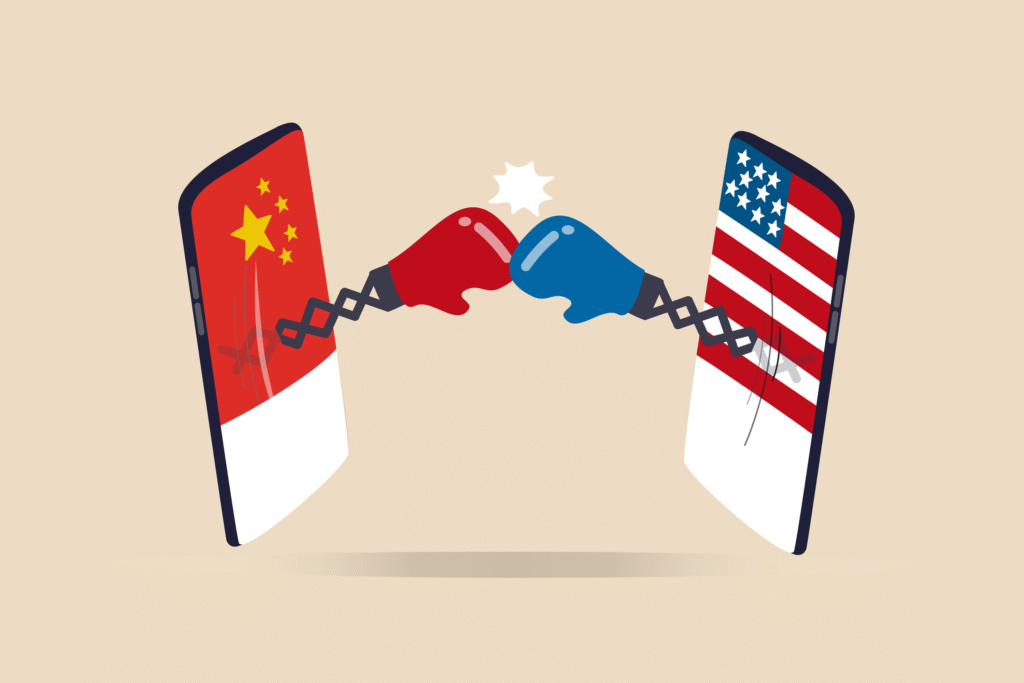
But that’s exactly the kind of situation the world is slowly moving towards.
Imagine this:
An engineer is working inside a Google office.
Not a soldier. Not part of any military.
But suddenly, a country declares:
👉 “These technology offices are now legitimate targets.”
This is not a fictional scenario.
👉 This is a real shift happening in modern warfare.
And in this blog, we’ll break down:
- How wars are changing
- Why tech companies are being targeted
- What it means for AI, cloud, and global economy
⚔️ From Military War to Tech War
Traditionally, wars were fought between:
- Armies
- Military bases
- Borders
But now, things are changing.
👉 The battlefield is expanding.
From:
- Military bases
To:
- Banks
- Economic centers
- Technology infrastructure
This is what we call:
👉 Tech War
🔥 What Triggered This Situation?
Recent events in the Middle East have changed the dynamics of conflict.
A strike on a financial institution triggered a strong response.
Soon after, statements indicated that:
👉 Economic and technological infrastructure could become targets.
This means:
- Banks
- Cloud infrastructure
- Tech offices
👉 All are now part of the war conversation.
Tech War Explained is not just about military power anymore. Countries are now competing for dominance in AI infrastructure, semiconductor production, cloud computing, and cyber capabilities.
Why Tech Companies Are Targeted in Tech War Explained
Here’s the important part.
Modern economies depend heavily on:
- Cloud servers
- Data centers
- AI infrastructure
- Financial systems
If you disrupt these:
👉 You don’t just damage buildings
👉 You disrupt entire economies
That’s why tech companies are now seen as:
👉 Strategic assets
🌐 The New Target List
In recent developments, several global tech companies were mentioned as part of strategic infrastructure.
These include:
- Amazon (AWS)
- Microsoft
- Nvidia
- Oracle
- IBM
- Palantir
👉 These are not just companies.
👉 They are the backbone of the digital world.
⚠️ Why This Is Dangerous
Let’s understand the real impact.
Earlier:
👉 Soldiers knew the risks of war.
Now:
👉 A normal office employee may unknowingly be in a high-risk zone.
🧠 Psychological Impact
This creates fear and uncertainty.
- Employees may hesitate to work in certain regions
- Companies may relocate teams
- Investments may slow down
👉 War is no longer just physical.
👉 It’s psychological.
💸 Financial Impact of Tech War
The biggest impact is economic disruption.
When a data center is affected:
- Banking systems stop
- Payment gateways fail
- Enterprise software goes offline
👉 Everything connected to that infrastructure is affected.
🏦 Real-World Effect
If a cloud server goes down:
- Businesses cannot process payments
- Apps stop working
- Services get interrupted
👉 This leads to massive financial loss.
⚠️ The Insurance Problem
Here’s something most people don’t know.
👉 Standard insurance policies usually do NOT cover war damage.
This means:
- If infrastructure is damaged
- Companies bear the full cost
👉 No insurance payout.
This adds a huge financial risk for tech companies.
🤖 Why This Matters for AI
This is where things get even more critical.
The Middle East is becoming a major hub for:
👉 AI infrastructure development
🚀 Major Investments
Companies are investing billions into:
- AI data centers
- Cloud infrastructure
- High-performance computing
Projects include:
- Massive AI campuses
- Multi-gigawatt power facilities
- Global-scale computing networks
🎯 Why It Matters
These infrastructures are:
👉 The backbone of future AI development
If they are disrupted:
👉 AI progress slows down globally
🔥 The Power of Uncertainty
One of the most strategic aspects of modern war is:
👉 Creating uncertainty.
Even without physical damage:
- Fear affects workforce
- Companies rethink expansion
- Investments pause
👉 Uncertainty itself becomes a weapon.
🌍 Bigger Picture – Tech War Explained and the Future of War -Tech War Explained
Let’s connect everything.
Wars are evolving like this:
- Military warfare
- Economic warfare
- Technology warfare
🧠 New Battlefield
The new battlefield includes:
- Cloud servers
- AI data centers
- Financial systems
These are not just technical systems.
👉 They are the backbone of global economy.
This is why the phrase “Tech War Explained” is becoming increasingly important in discussions around global security and future warfare.
⚡ What This Means for You
You might think:
👉 “This doesn’t affect me directly.”
But it does.
Because you rely on:
- Cloud apps
- Online payments
- AI tools
- Digital services
If these systems are disrupted:
👉 Your daily life is affected.
📺 Watch Full Video
👉 https://youtu.be/AdwUpUbi-sY
External Link:
👉 https://openai.com
👉 https://aws.amazon.com
Related Read:
iPhone 18 Pro Leaks – Everything We Know So Far
Smartwatch with Built-in Earbuds Review – Useful Innovation or Just a Gimmick?
❓ FAQs (SEO Boost)
Q1: What is tech war?
Tech War Explained is not just about military power anymore. Countries are now competing for dominance in AI infrastructure, semiconductor production, cloud computing, and cyber capabilities.
Q2: Why are tech companies targeted?
Because they support global economy, communication, and AI systems.
Q3: Can AI infrastructure be affected by war?
Yes, especially if data centers and cloud systems are disrupted.
Q4: Does insurance cover war damage?
Usually no, which increases financial risk for companies.
“Tech War Explained” shows how digital infrastructure has become as important as traditional military assets in modern conflicts.
🔥 Final Thoughts
The biggest shift happening today is this:
👉 War is no longer limited to soldiers.
It now includes:
- Engineers
- Developers
- Tech companies
- Data centers
💡 One Powerful Insight:
👉 Fire is not conscious… but it can destroy.
👉 AI is not conscious… but it can build systems.
🎯 Conclusion
This is not just a regional issue.
👉 This is a global shift.
Future wars will include:
- Cyber attacks
- Infrastructure disruption
- Technology control
And the question is:
👉 Are we ready for that future?
Read More: Future of AI Explained